




Although the need to protect your hands is intuitive, it is nevertheless advisable to choose your pair of gloves consciously, with the necessary information on the desired characteristics and standards that define the quality of the product. With regard to protective gloves for professional use, the standards are tested and certified by accredited laboratories according to the European EN standards that determine them. Let's see in detail two of the most important.
Key Points
• EN 388:2019: protection against mechanical risks
• EN 407:2020: protection against thermal risks (heat and/or fire)
3'reading
• EN 388:2019: protection against mechanical risks
This standard covers protective gloves against mechanical risks and has 6 performance levels. Usually, under/next to the pictogram four numbers and one or two letters are displayed, indicating the performance level of the glove (see Image 1).
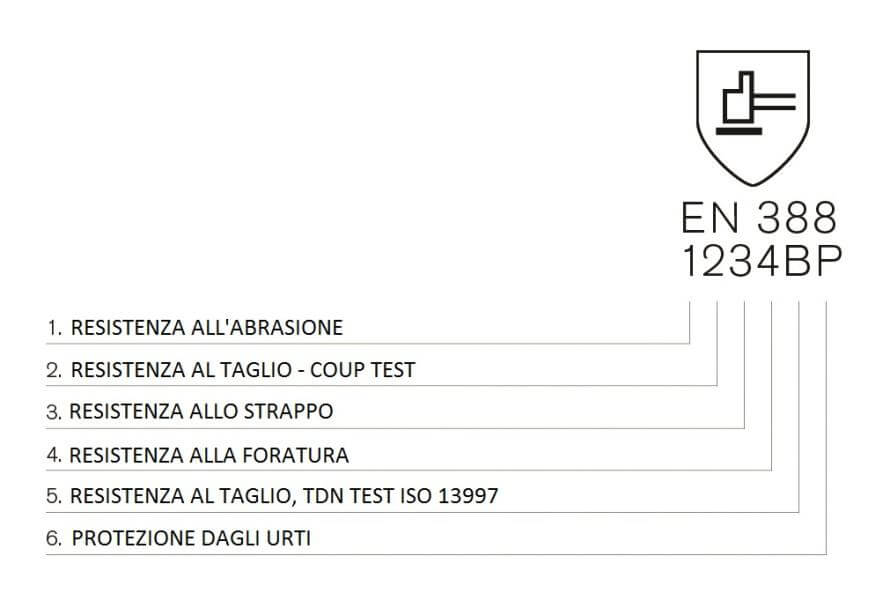
Image 1: infographic of EN 388:2019
1. Abrasion resistance (cycles) – Level 1 to 4
The material is subjected to abrasion through the use of sandpaper under a certain pressure. The level of protection is indicated by a scale from 1 to 4 depending on the number of cycles required until a hole appears in the material. The higher the number, the better the abrasion resistance. The Target High Abrasion ErgoShield gloves by Masters of Gloves, for example, have a Level 4 abrasion resistance, which is the maximum. These tactical gloves, part of the Target Shooting Gloves line, are equipped with a double technology: ArmaSuede, a synthetic suede that combines high manual skills and anti-abrasion function and which is 8 times stronger than other synthetic suedes; ErgoShield, a technology made with a 3D printed TPR design to ensure ergonomic protection from basic impacts with total focus on dexterity and precision.

Image 2: Target High Abrasion ErgoShield
2. Cut resistance, Coup Test (for blanking) – Level 1 to 5
Blade cut protection is tested by running a knife over the glove material until it is cut. The level of protection is given by a number between 1 and 5, where 5 indicates maximum cut protection. If the material causes the blade to lose sharpness during this test, the ISO 13997 cut test (TDM test) should be performed instead - see point 5. If you are looking for gloves that protect you from the blade, you can opt for the 2nd Skin gloves by Masters of Gloves that reach a Level 4 of cut protection and that actually feel like a second skin thanks to their slim fit design.

Image 3: back of 2nd Skin
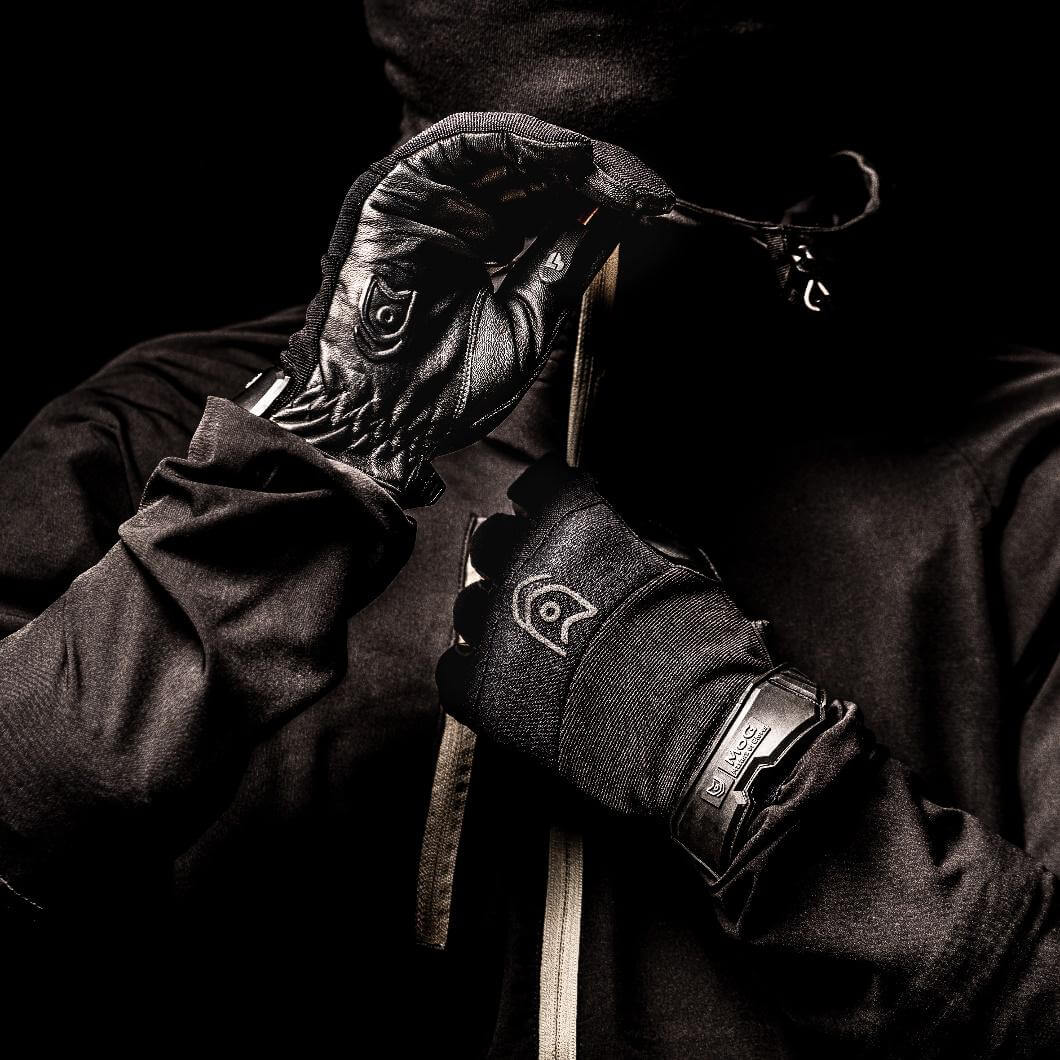
Image 4: 2nd Skin
3. Tearing strenght – Level 1 to 4
Here, however, the force required to tear the glove material is measured. The level of protection is indicated by a number between 1 and 4, where 4 indicates maximum tear resistance.
4. Puncture resistance – Level 1 to 4
The puncture test score is based on the amount of force (N or Newton) required to puncture the material with a tip. The protection function is indicated by a number between 1 and 4, where 4 indicates the strongest material. Fast Rope gloves by Masters of Gloves reach the highest score in this area, Level 4. They are in fact recommended especially for fast roping practices up to 90 feet high.
Note: This test is not appropriate for testing acutely impacted punctures such as needles. It is important to highlight the difference between puncturing with a blunt object and needle stick. It would not be correct to say that a specific material or type of gloves is 100% needle-puncture-proof; in fact, there can always be situations in which the needle penetrates the material, causing injuries.

Image 5: Fast Rope
5. Cut resistance, TDM Test ISO 13997 – Level A to F
Since the new EN 388 standard was implemented, it is also worth seeing in detail this additional cutting test, which consists of a knife that cuts the material with constant speed but with increasing force, until the complete tearing of the protective material. This test is required in cases where the blade becomes blunt during the "Coup Test". The result is given by a letter, from A to F, where F indicates the highest level of protection. Very important: if one of these letters is mentioned, this TDM test method determines the level of protection instead of the "Coup Test". The 2nd Skin model, already mentioned in point 2, shows a "C" level in this classification.
6. Impact protection
The impact protection on the upper surface of protective gloves is assessed according to EN 388:2016, which includes an impact test according to section 6.9 of EN 13594. The 'P' marking is added when the glove passes the test. The impact test is performed only for gloves for which the characteristic "impact resistance" is declared. The Commando Synthetic gloves by Masters of Gloves, for example, bear the "P" marking. These durable combat gloves have been designed together with the Belgian army to be suitable for most tactical operations (weapons management, search operations, logistics, assembly and much more), combining high protection with maximum comfort.

Image 6: Commando Synthetic
• EN 407:2020: protection against thermal risks (heat and/or fire)
Another important standard concerns thermal risks (heat and/or fire) and is called EN 407:2020, which indicates requirements, test methods, marking and information for protective gloves and other hand protection equipment for professional use, identified by the pictogram as shown in Image 7, followed by 6 performance levels (with a scale from 0 to 4) against specific risks. Note: "0" = the glove failed the test; "X" = the glove has not been tested.
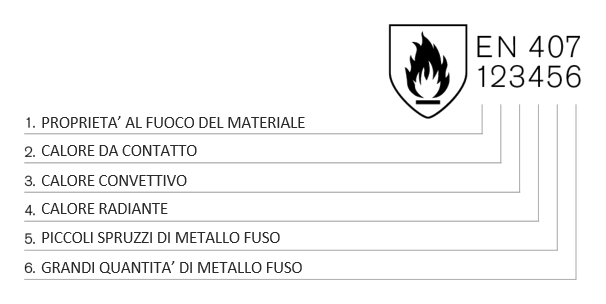
Image 7: infographic of EN 407:2020
1. Fire properties of the material
In this test, the ignition time and how long the material glows or burns after ignition is measured. If the seam comes off after an ignition time of 15 seconds, the glove has failed the test.
2. Contact heat
The glove is exposed to very high temperatures, ranging from + 100°C to + 500°C. It is then measured how long it takes for the inner side of the glove to warm up by 10°C compared to the beginning (about 25°C). The glove must withstand the temperature increase of up to 10°C for at least 15 seconds in order to pass the test. As known, especially in the case of descent from ropes, a lot of rubbing heat is generated: the Fast Rope gloves, already mentioned above regarding puncture protection, also report Level 1 of contact heat protection, which corresponds to 100 ° C with a threshold time ≤15 seconds.
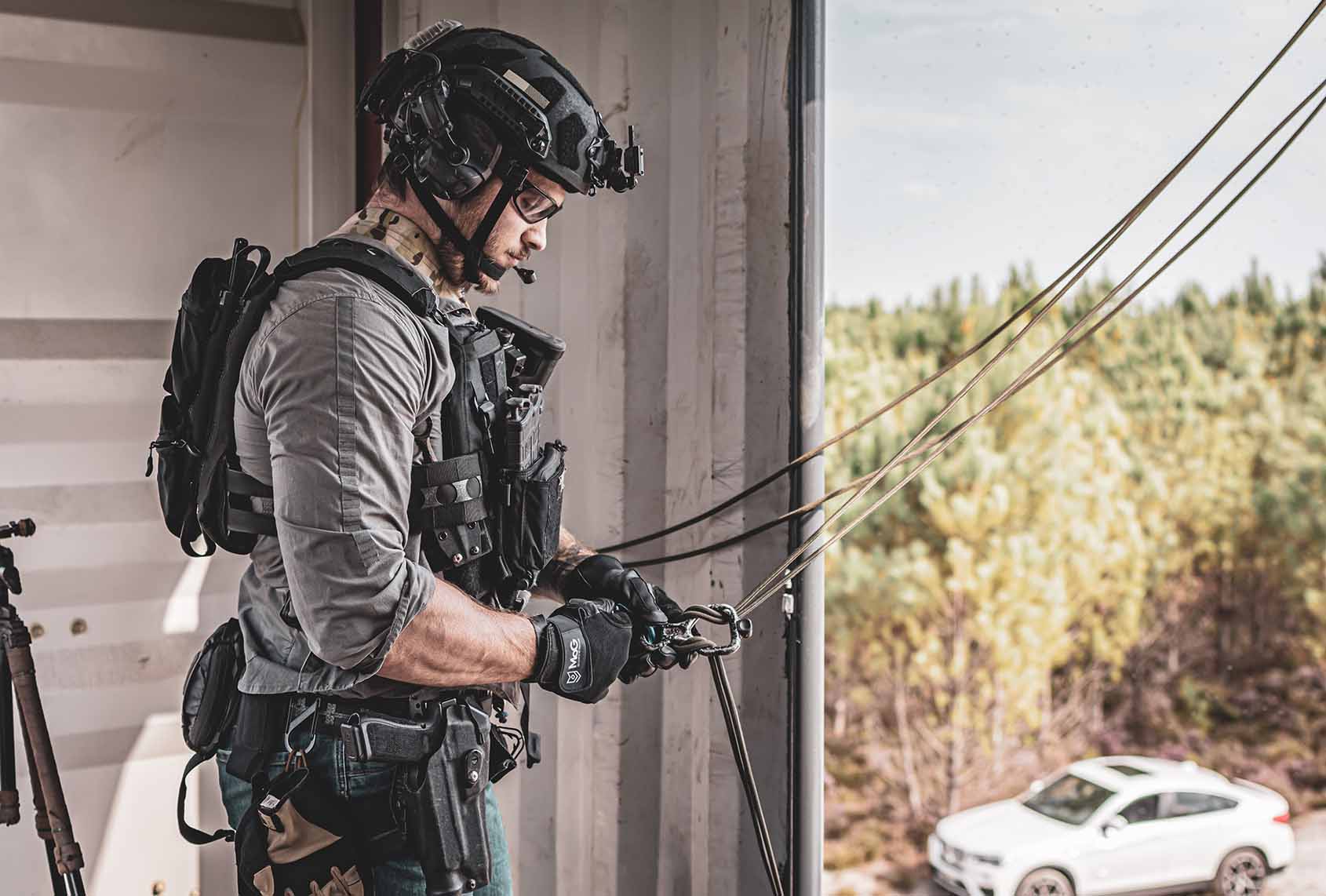
Image 8: Fast Rope
The Target High Abrasion, Target High Abrasion ErgoShield, Commando Synthetic and Target Light Duty gloves also feature Level 1 contact heat protection.
3. Convective heat
This test measures the time required to increase the internal temperature of the glove by 24°C, using gas lubrication (80kW/m2).
4. Radiant heat
Here the average time for a thermal permeation of 2.5kW/m2 is measured.
5. Small splashes of molten metal
The test is based on the number of molten metal droplets that generate a temperature rise of 40°C between the glove material and the skin.
6. Large quantities of molten metal
To carry out this test, a PVC film is first attached to the back of the glove material; then, molten iron is poured onto the material. The measure consists of how many grams of molten iron are needed to damage the PVC film.
Note: It often happens to confuse or misunderstand contact heat protection with flame protection, both covered by the EN 407 standard. The so-called 'flame retardant' gloves are made of a material which is chemically treated to self-extinguish; on the other hand, the so-called 'flame resistant' gloves, are made of a material that is inherently resistant to catching fire (self-extinguishing) and do not melt or drip when exposed directly to flames/extreme heat.
If you want to know more about all the types of gloves by Masters of Gloves available on Tactyka, click here.
Stay tuned on our Tactykal Tips blog! Coming soon: “Excursions”, a series of five articles dedicated to the outdoor world. If you have any curiosity and would like to know more, send us an email to info@tactyka.com with the topic you want to deepen.
Source: Masters of Gloves official website (https://www.moggloves.com/) Disclaimer: This Article and all content on the Site (including product information contained in the Short Description, Features, Applications and Standards sections) is for informational purposes only. Before purchasing gloves, we invite the User to refer to the Manual and the Declaration of Conformity on our Site for each type of glove. Both Manual and Declaration of Conformity can be downloaded in .pdf format in the Manual section.